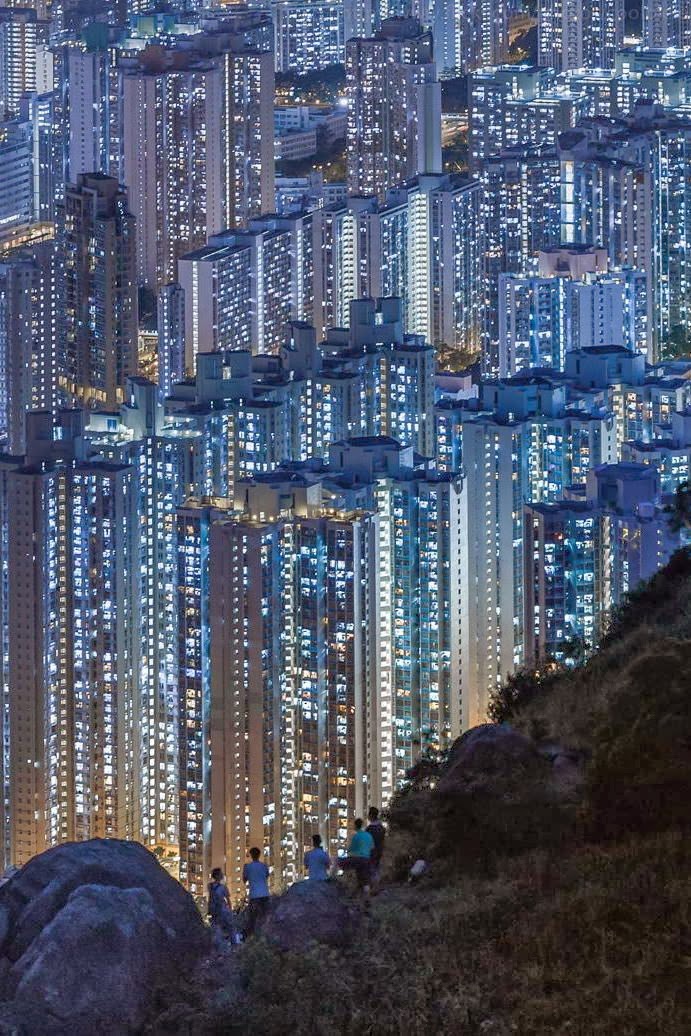
According to
Emporis, there are 1,223 skyscrapers in Hong Kong, which puts the city
at the top of world rankings. It has more buildings higher than 500 ft
(or 150m) than any other city. The high density and tall skyline of Hong
Kong's urban area is due to a lack of available sprawl space, with the
average distance from the harbour front to the steep hills of Hong Kong
Island at1.3 km (0.81 mi), much of it reclaimed land. This lack of space
causes demand for dense, high-rise offices and housing. Thirty-six of
the world's 100 tallest residential buildings are in Hong Kong. More
people in Hong Kong live or work above the 14th floor than anywhere else
on Earth, making it the world's most vertical city.
As a result of the lack of space and demand for construction, few older
buildings remain, and the city is becoming a centre for modern
architecture. The International Commerce Centre (ICC), at 484 m (1,588
ft) high, is the tallest building in Hong Kong and the third tallest in
the world, by height to roof measurement. The tallest building prior to
the ICC is Two International Finance Centre, at 415 m (1,362 ft) high.
Other recognisable skyline features include the HSBC Headquarters
Building, the triangular-topped Central Plaza with its pyramid-shaped
spire, The Centerwith its night-time multi-coloured neon light show; A
Symphony of Lights and I. M. Pei's Bank of China Tower with its sharp,
angular façade. According to the Emporis website, the city skyline has
the biggest visual impact of all world cities. Also, Hong Kong's skyline
is often regarded to be the best in the world, with the surrounding
mountains and Victoria Harbour complementing the skyscrapers. Most of
the oldest remaining historic structures, including the Tsim Sha Tsui
Clock Tower, the Central Police Station, and the remains of Kowloon
Walled City were constructed during the 19th and early 20th centuries.


